
Argentina vs Bolivia: A New Era Begins Without Messi — The Definitive Look at Argentina’s Next Chapter
Argentina have spent years being defined by Lionel Messi, but their first match after the 2026 World Cup showed that the national team is already entering a different chapter. The 4–0 victory over Bolivia provides an early look at how Argentina can share attacking responsibility without Messi, and in this guide, we examine what the result really revealed.
summary
- Argentina defeated Bolivia 4–0 in Córdoba in its first post-World Cup friendly without Messi.
- Lautaro Martínez, Nico Paz, Cristian Romero and José Manuel López scored for Argentina.
- Nico Paz scored and assisted, making him one of the standout performers of the match.
- Argentina recorded 68.6% possession and 13 shots, compared with Bolivia’s 31.4% possession and two shots.
- Argentina’s attack distributed responsibility across several players rather than relying on one central creative figure.
- Messi’s international retirement has started a transition, although he is scheduled to make a farewell appearance against Benin on October 6.
- The 4–0 result is an important early snapshot, but future competitive matches will provide a broader test of Argentina’s development.
What Does Argentina’s New Era Without Messi Actually Mean?
Argentina’s new era is the period of transition in which the national team begins building its identity and attacking structure beyond Lionel Messi. Rather than meaning that Argentina has immediately replaced Messi, the phrase describes the process of developing a team that can create, control and score without depending on its longtime captain.
Messi announced his retirement from international football after Argentina’s 2026 World Cup final defeat, ending his regular international career after more than two decades with the national team. However, the Argentine Football Association later arranged a farewell appearance against Benin for October 6 at Buenos Aires’ Monumental Stadium.
the transition does not mean Argentina has suddenly become a completely different team. Lionel Scaloni’s established structure remains important, while players such as Lautaro Martínez, Julián Álvarez, Alexis Mac Allister, Enzo Fernández and Cristian Romero provide continuity.
Argentina national team 2026
Argentina’s challenge is to preserve its collective identity while finding new sources of creativity. For example, the Bolivia match showed Nico Paz operating as an important attacking contributor rather than simply waiting for Messi to create opportunities.
Why Was Argentina vs Bolivia Important for the Post-Messi Era?
Argentina vs Bolivia was important because it provided an early competitive-style test of Argentina’s attacking identity without Messi. The match was the first of Argentina’s three scheduled friendlies in the international window following the 2026 World Cup.
the significance extended beyond the 4–0 scoreline. Argentina had to demonstrate that its possession, movement and chance creation could function without the player who had been its most recognizable creative reference for years.
Bolivia offered a useful opponent for that assessment because Argentina was required to break down a team attempting to remain compact. The match therefore provided visible evidence of how Argentina could move the ball and generate chances without constantly searching for Messi.
Argentina’s 2026 World Cup campaign
the result should not be treated as proof that Argentina has completely solved the post-Messi transition. One friendly can reveal tactical tendencies, but it cannot establish the long-term strength of a national team.
How Did Argentina Perform Without Messi Against Bolivia?
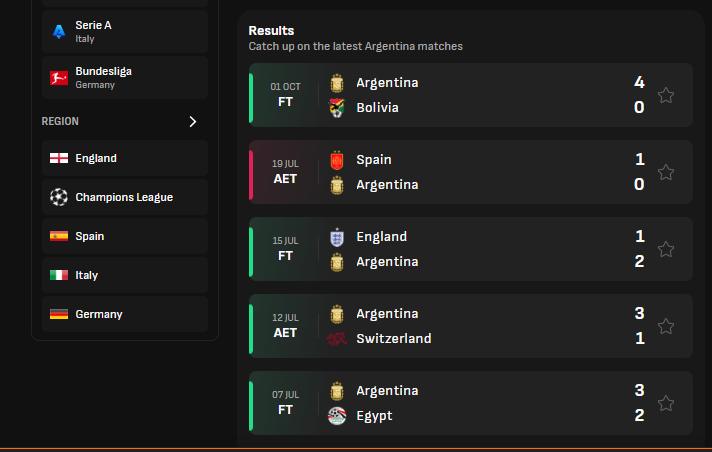
Argentina controlled Bolivia through possession, territory and attacking volume in the 4–0 victory. Argentina finished with 68.6% possession and 13 shots, while Bolivia recorded 31.4% possession and two shots.
Argentina’s dominance appeared from the opening stages as the team circulated possession and looked for combinations through midfield. The AFA described Argentina as playing with significant ball possession and intense transitions while searching for the opening goal.
the goals demonstrated that Argentina did not need one player to provide every attacking solution.
| Area | Argentina | Bolivia |
|---|---|---|
| Possession | 68.6% | 31.4% |
| Shots | 13 | 2 |
| Goals | 4 | 0 |
| Result | Victory | Defeat |
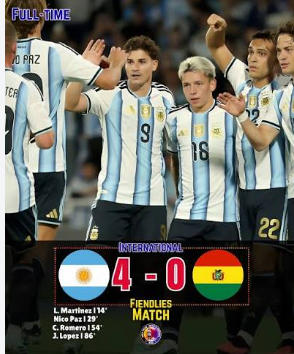
Moreover, the scoring pattern was significant because four different Argentina players found the net. Lautaro Martínez opened the scoring, Nico Paz added the second, Cristian Romero scored the third and José Manuel López completed the 4–0 result.
Who Scored for Argentina Against Bolivia?
Lautaro Martínez, Nico Paz, Cristian Romero and José Manuel López scored Argentina’s four goals against Bolivia. The distribution of goals across different positions offered one of the clearest signs of Argentina’s collective attacking potential.
Lautaro Martínez Provides the First Breakthrough
Lautaro Martínez gave Argentina the lead after Alexis Mac Allister helped create the opening. The striker’s goal demonstrated the importance of Argentina’s established forwards even without Messi supplying the final pass.
Lautaro Martínez Argentina goals
Nico Paz Adds a Major Creative Contribution
Nico Paz scored Argentina’s second goal and later assisted Cristian Romero for the third. His goal-and-assist contribution made him one of the most notable individual performers of the match.
Cristian Romero and José Manuel López Complete the Score
Cristian Romero added Argentina’s third goal before José Manuel López scored late to complete the 4–0 victory. López’s goal was also his first for Argentina, adding another development point to the match.
How Did Nico Paz Perform Against Bolivia?
Nico Paz scored one goal and provided one assist against Bolivia, making his performance an important early indicator of Argentina’s emerging attacking options. His contribution showed that Argentina can give younger players meaningful creative responsibility.
Paz’s influence went beyond simply scoring. He also created a goal for Romero, meaning his contribution directly affected two of Argentina’s four goals.
his performance should not automatically lead to comparisons with Messi. Nico Paz is an emerging Argentina player, not a direct replacement for Lionel Messi. The more useful question is how his qualities can fit into Argentina’s collective structure.
Paz represents the type of player Argentina will need during its next cycle: technically capable, comfortable between lines and able to contribute directly to goals.
Nico Paz celebrating his goal for Argentina against Bolivia
Which Argentina Players Could Shape the Team After Messi?
Argentina’s next generation could be shaped by a combination of established leaders and emerging attacking players rather than one direct Messi successor. The Bolivia match highlighted several players who can contribute to that transition.
Lautaro Martínez remains an important attacking reference because his movement and finishing give Argentina a central goal threat.
Nico Paz demonstrated his potential to influence matches creatively, while José Manuel López added another attacking option by scoring his first international goal.
midfielders such as Alexis Mac Allister and Enzo Fernández can help Argentina maintain control and progression through the middle of the pitch.
| Player | Role in the Bolivia match | Potential importance |
|---|---|---|
| Lautaro Martínez | Scored | Central attacking threat |
| Nico Paz | Scored and assisted | Emerging creative option |
| Cristian Romero | Scored | Defensive leader and set-piece threat |
| José Manuel López | Scored | Emerging forward option |
| Alexis Mac Allister | Assisted Lautaro | Midfield creativity |
What Changed in Argentina’s Attack Without Messi?
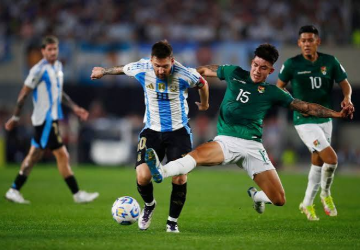
Argentina’s attack against Bolivia showed a broader distribution of responsibility rather than dependence on a single superstar. That difference is one of the most important tactical observations from the match.
Argentina continued to control possession and create attacking combinations without Messi acting as the primary creative reference. The 68.6% possession figure provides concrete evidence of Argentina’s control.
the goals came from four different players, which illustrates a more distributed scoring structure. Argentina’s 4–0 victory demonstrated that its attack can produce goals through multiple contributors.
At the same time, this match does not prove that Argentina no longer needs an elite individual creator. Bolivia did not provide the same level of resistance that Argentina will encounter against stronger international opponents.
Is Nico Paz Ready to Become a Key Player for Argentina?
Nico Paz has provided an early argument for a larger role, but one performance cannot establish him as Argentina’s definitive next attacking leader. His goal and assist make him an important player to watch as the national team develops.
Paz’s contribution is significant because he directly influenced half of Argentina’s four goals against Bolivia. That production gives his performance genuine statistical weight rather than relying only on subjective praise.
Argentina’s future will likely depend on several players developing together. The post-Messi era is more likely to be a collective transition than a search for one replacement.
What Did Argentina’s 4–0 Victory Reveal About the Team’s Future?
Argentina’s 4–0 victory revealed that the national team can maintain control and attacking production without Messi, but the long-term transition remains unfinished.
Argentina showed strong statistical control, holding 68.6% possession while limiting Bolivia to two shots.
the four-goal distribution demonstrated that Argentina has multiple players capable of contributing to the scoreboard. That balance could become increasingly important as the team moves beyond Messi’s regular involvement.
the opposition must be considered. A friendly against Bolivia is useful evidence, but Argentina will eventually need to demonstrate the same flexibility against different tactical approaches and stronger opponents.
What Can Argentina Improve After the 4–0 Victory?
Argentina can improve by testing its emerging attacking structure against stronger and more varied opposition. The 4–0 scoreline provides encouragement, but it does not eliminate the questions created by Messi’s departure.
Argentina needs to determine which attacking combinations work consistently without Messi. For example, the team can continue testing how Paz, Lautaro Martínez, Julián Álvarez and other forwards combine.
Argentina also needs to preserve its defensive standards while introducing younger players. A successful transition requires both continuity and controlled renewal.
Lionel Scaloni’s future is another longer-term consideration because his contract is due to expire in December 2026, according to Reuters.
What Can Readers Watch for in Argentina’s Next Matches?
Argentina’s next matches will provide further evidence about how the team is developing beyond Messi. The immediate schedule includes Burkina Faso on October 3 and Benin on October 6.
the Burkina Faso match will offer another opportunity to examine Argentina’s evolving combinations. The Benin fixture will then have a different significance because Messi is scheduled to make his farewell appearance.
readers should watch three areas:
- Who takes creative responsibility when Argentina faces different defensive structures.
- Whether younger players receive consistent opportunities alongside established stars.
- Whether Argentina maintains its possession and chance-creation patterns against different levels of opposition.
Argentina’s next step is to continue the transition through the remaining international friendlies while balancing established players with emerging talent. The schedule moves from Bolivia to Burkina Faso before Messi’s planned farewell against Benin.
the Burkina Faso match on October 3 gives Argentina another immediate test without Messi. Reuters reported that Messi, Rodrigo De Paul and Giovani Lo Celso were set to join specifically for the final Benin match.
the Benin fixture on October 6 is expected to mark Messi’s final Argentina appearance after his international retirement. FIFA confirmed that the farewell will take place at the Monumental in Buenos Aires.
How Can You Follow Argentina’s Post-Messi Development?
The best way to understand Argentina’s transition is to track performances across several matches rather than judging the team from one result. Match statistics, lineups, goal contributions and tactical changes can reveal whether the patterns seen against Bolivia continue.
Th compare possession and shots across upcoming matches. Second, monitor which players repeatedly contribute goals and assists. Third, watch how Argentina creates chances when opponents successfully restrict its usual passing routes.
Conclusion: Argentina’s Post-Messi Story Has Started
Argentina’s post-Messi era has begun with a convincing 4–0 victory over Bolivia, but the result represents a starting point rather than a final verdict. Lautaro Martínez, Nico Paz, Cristian Romero and José Manuel López provided the goals, while Argentina’s 68.6% possession showed that its collective.
Get more information about Super eagle possition, AFON
Written by
Peterson — Sports and Nigeria Football Content Writer, covering football news, international competitions, national teams and emerging developments in the game.
Reviewed by
Askng.info Sports Editorial Desk — Editorial review focused on football reporting, match analysis and factual consistency.
Disclaimer: This article was initially drafted using AI assistance. However, the content has undergone thorough revisions, editing, and fact-checking by human editors and subject matter experts to ensure accuracy.